
Haya in Islam is a quiet strength. It is the modesty and shyness that keep a believer from what is shameful and draw her towards what is beautiful. For Muslim women, haya shows in how we dress, how we speak, how we look and how we carry ourselves before Allah and before people. In this article we look at haya in the Quran and the authentic Sunnah, and at simple ways to live it today.
What Is Haya in Islam?
The Arabic word haya (حَيَاء) comes from the same root as hayah, life. Scholars explain that a heart which is truly alive feels shy of doing wrong, while a heart that has lost its haya is, in a sense, dying. Haya is a feeling of shyness that moves us to leave what is ugly and to give every right its due.
Haya is not the same as being timid. It does not mean we stop speaking the truth, seeking knowledge or doing good. It means we do these things with dignity, gentleness and awareness that Allah sees us.
Haya is a branch of faith
The Prophet ﷺ said:
الْإِيمَانُ بِضْعٌ وَسَبْعُونَ شُعْبَةً … وَالْحَيَاءُ شُعْبَةٌ مِنَ الْإِيمَانِ
“Faith has seventy-odd branches … and haya is a branch of faith.” (Sahih Muslim 35; Sahih al-Bukhari 9)
So haya in Islam is not only good manners. It is part of iman itself. When haya grows, faith grows with it.
Haya in the Quran
The woman who walked with haya
In Surah Al-Qasas, Allah describes one of the two daughters of the righteous man of Madyan coming to Prophet Musa عليه السلام:
فَجَاءَتْهُ إِحْدَاهُمَا تَمْشِي عَلَى اسْتِحْيَاءٍ
“Then one of the two women came to him, walking with shyness.” (Al-Qasas 28:25)
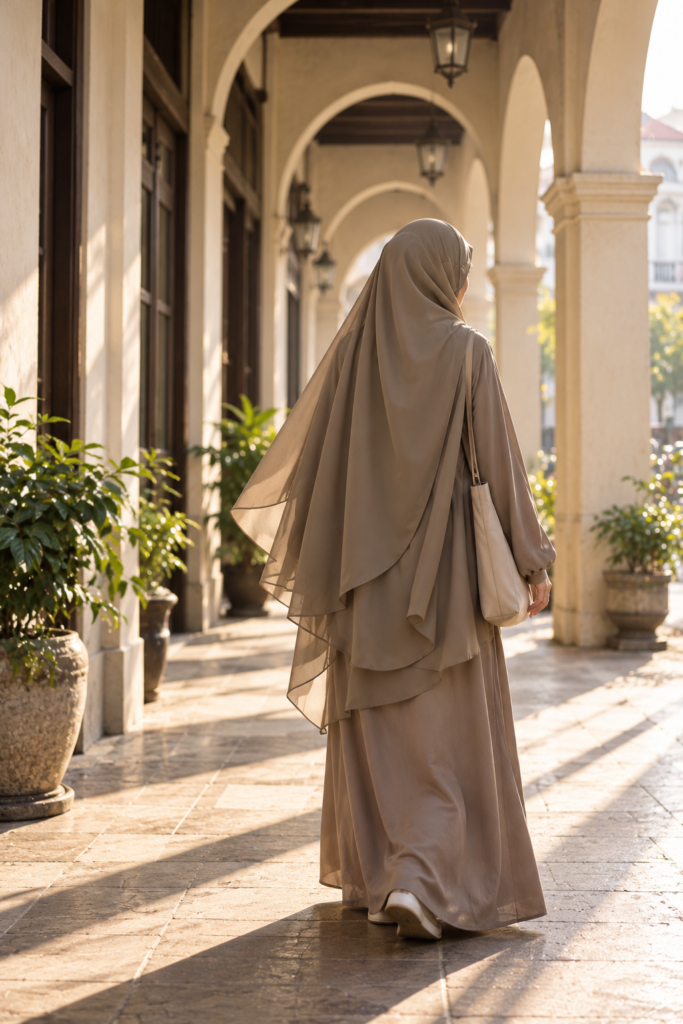
Of all the details Allah could have mentioned about her, He mentioned the way she walked. Her haya was visible in her steps. She spoke clearly and did what she needed to do, yet she carried herself with modesty. This is a beautiful picture of haya in Islam for women: confident in purpose, gentle in manner.
The garment of taqwa
يَا بَنِي آدَمَ قَدْ أَنزَلْنَا عَلَيْكُمْ لِبَاسًا يُوَارِي سَوْآتِكُمْ وَرِيشًا ۖ وَلِبَاسُ التَّقْوَىٰ ذَٰلِكَ خَيْرٌ
“O children of Adam, We have sent down to you clothing to cover your nakedness and as adornment. But the garment of taqwa, that is best.” (Al-A’raf 7:26)
Clothing covers the body and beautifies it, but the inner garment of taqwa is better still. Haya joins the two: modest outer clothing that comes from a heart conscious of Allah.
The khimar over the chest
وَقُل لِّلْمُؤْمِنَاتِ يَغْضُضْنَ مِنْ أَبْصَارِهِنَّ وَيَحْفَظْنَ فُرُوجَهُنَّ … وَلْيَضْرِبْنَ بِخُمُرِهِنَّ عَلَىٰ جُيُوبِهِنَّ
“And tell the believing women to lower their gaze and guard their chastity … and to draw their head coverings (khumur) over their chests.” (An-Nur 24:31)
This verse brings together the gaze, chastity and dress. The word khumur is the plural of khimar, the head covering that falls over the chest. Allah also commands the believing women to draw their outer garments close, “so that they will be recognised and not harmed” (Al-Ahzab 33:59).
Haya in Islam Through the Hadith
Haya brings nothing but good
الْحَيَاءُ لَا يَأْتِي إِلَّا بِخَيْرٍ
“Haya brings nothing except good.” (Sahih al-Bukhari 6117; Sahih Muslim 37)
The character of Islam
إِنَّ لِكُلِّ دِينٍ خُلُقًا وَخُلُقُ الْإِسْلَامِ الْحَيَاءُ
“Every religion has a distinctive character, and the character of Islam is haya.” (Sunan Ibn Majah 4181, graded hasan)
When haya is lost
إِذَا لَمْ تَسْتَحِ فَاصْنَعْ مَا شِئْتَ
“If you feel no shame, then do as you wish.” (Sahih al-Bukhari 6120)
This is a warning, not a permission. Haya is the brake that stops us from sliding into what we would regret.
The haya of the Prophet ﷺ
Abu Sa’id al-Khudri رضي الله عنه said that the Messenger of Allah ﷺ was more shy than a young maiden behind her curtain, and when he disliked something, it could be seen on his face (Sahih al-Bukhari 3562; Sahih Muslim 2320). Haya is not only for women; it was the character of the best of creation.
Living Haya in Islam as a Muslim Woman Today
Haya in how we dress
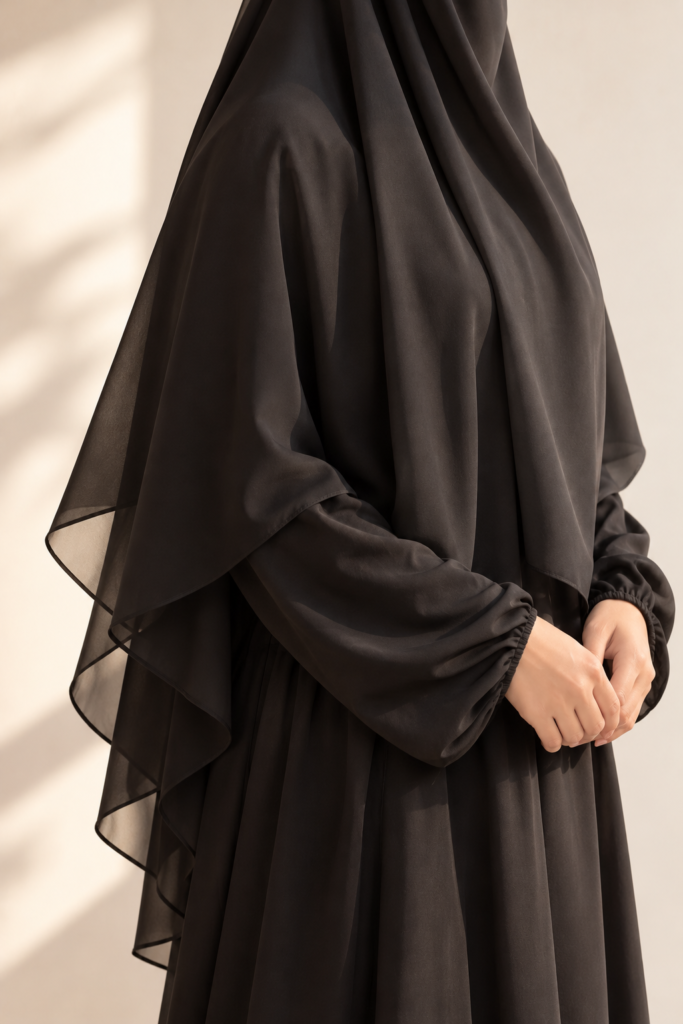
According to the Sunnah, a woman’s clothing in public covers her aurah, is loose enough not to shape the body, and thick enough not to show what is beneath. It should not be worn to draw attention. Many sisters find that a long khimar makes this easier, because it covers the head, chest and back in one piece. When choosing fabric, look at its opacity: our product pages list an opacity level for each piece for this reason. You can read how our Safya Clipe khimar keeps coverage in place even in wind and in sujood.
Haya in speech and online
Haya shows in a calm, clear voice, in avoiding vulgar words and gossip, and in what we post and share. Before posting, a simple question helps: would I be shy if Allah saw this? He does.
Haya in the gaze
The first command in An-Nur 24:31 is to lower the gaze. The heart follows the eyes, so guarding the gaze protects the heart.
Haya with Allah
The Prophet ﷺ said: “Have haya before Allah as He truly deserves.” He explained that this means guarding the head and what it contains, the stomach and what it holds, and remembering death (Jami’ at-Tirmidhi 2458, graded hasan). True haya in Islam begins in private, where only Allah sees.
Haya Is Not Weakness
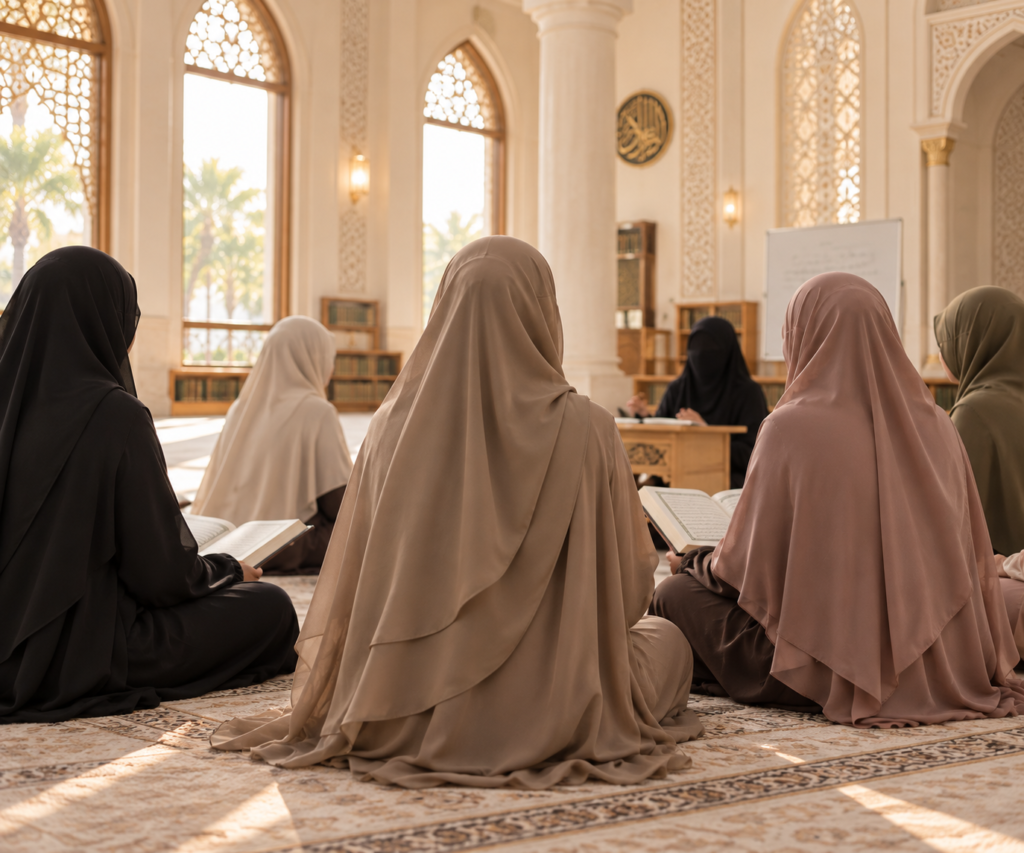
Aishah رضي الله عنها praised the women of the Ansar: “How excellent were the women of the Ansar; haya did not stop them from learning their religion” (Sahih Muslim 332). Haya in Islam does not silence a woman when she needs to ask, learn or stand for what is right. It shapes how she does it.
At SHESHAWLS our tagline is Strength in Haya’, Elegance in Akhlak. We believe haya is a source of strength, not something that holds women back. Read more in our story.
Simple Ways to Grow in Haya
Here are a few gentle steps to nurture haya in Islam in daily life:
- Know Allah. The more we remember that He sees us, the more natural haya becomes.
- Keep good company. Friends with haya make it easier to hold on to it.
- Dress with intention. Choose clothing that covers well and feels comfortable, so modesty is easy every day. Our size guide can help you find a khimar long enough for full coverage.
- Guard the gaze and the screen. Be mindful of what we watch and scroll.
- Make dua. Ask Allah to beautify you with haya and to make it easy for you.
Haya in Islam: Questions Sisters Ask
Is haya only for women?
No. Haya is for every believer. Allah commands believing men to lower their gaze first (An-Nur 24:30), and the Prophet ﷺ himself had the greatest haya.
Does haya mean I should not speak up?
No. The women of the Ansar asked questions about their religion openly. Haya shapes our manner, not our right to learn or speak the truth.
Is haya only about clothing?
Clothing is one part of haya in Islam. Haya also lives in our words, our gaze, our private moments and our relationship with Allah.
Closing Reflection
Haya in Islam is a gift that protects the heart and beautifies the whole person. May Allah adorn us with haya, make our clothing a garment of taqwa, and accept our efforts. If you are looking for pieces that make covering easier, explore our khimar collection or the Telekung Az-Zahra for prayer.

This article is a reminder for ourselves first. For detailed rulings, please refer to a trusted scholar. Quran translations are of meaning only.